Purple vs Yellow vs Hybrids — Which Passion Fruit Variety Actually Pays?
By Brian
Before you buy a single vine, you make one decision that quietly sets everything else — your pollination labor, your trellis budget, your market channel, even whether the planting produces fruit at all. That decision is which species of passion fruit to grow.
Get it right and the rest of the plan falls into place. Get it wrong and you can do everything else perfectly and still end up with a field of healthy, flowering vines that set almost no fruit. I've watched it happen, and the reason is almost never the one growers expect.
Here's the short version: yellow passion fruit yields roughly four times what purple does, which makes it the obvious choice for any operation chasing volume. But yellow can't pollinate itself — it can't even pollinate a genetically identical neighbor — and that single fact is what sinks most commercial yellow plantings. Purple is lower-yielding but self-fertile, simpler to manage, and commands a higher fresh-market price. Which one pays depends entirely on your scale, your elevation, and who you're selling to.
The two species that matter (and one that might)
Three Passiflora species dominate commercial growing worldwide. For almost everyone reading this, the real choice is between the first two.
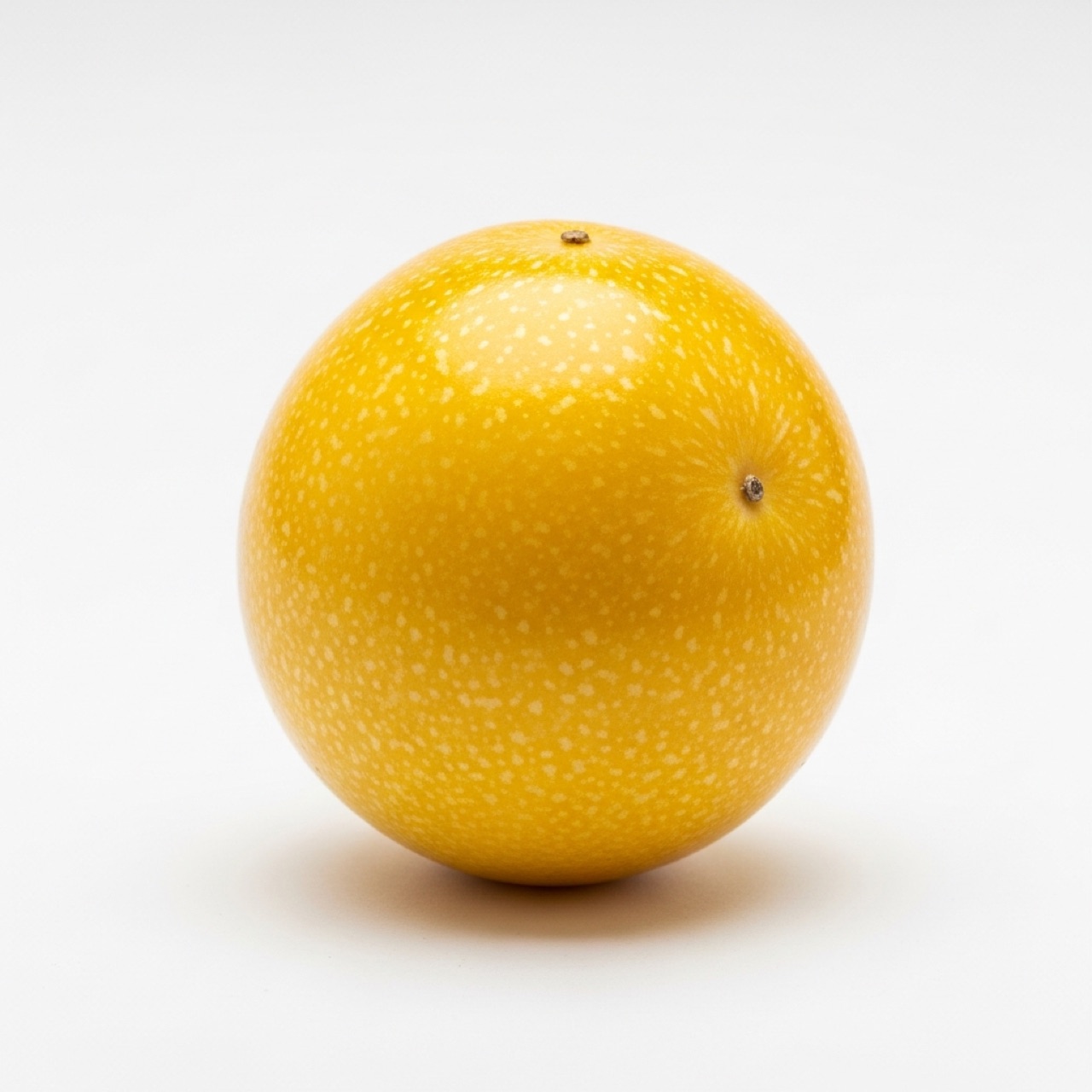
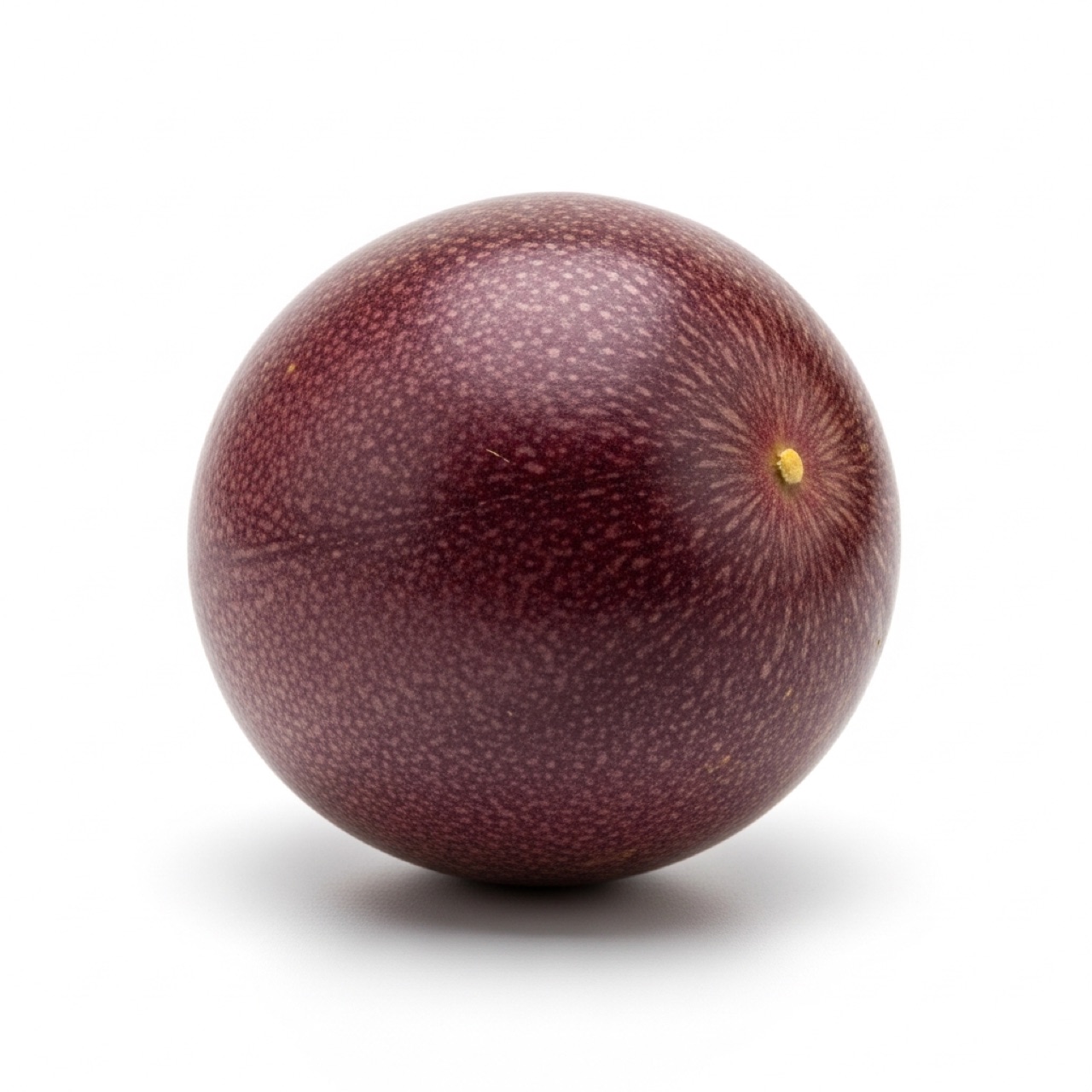
Yellow passion fruit — the volume play
Yellow (P. edulis f. flavicarpa) is the global commercial standard. It accounts for an estimated 95% of all processed passion fruit on earth. The vines are aggressive — 15 to 20 feet of growth a year — the fruit is large at 60–80g, and the juice volume per fruit is what the entire global juice industry is built on.
In Hawaii, well-managed yellow runs 8,000–15,000 lbs per acre. Brazilian growers on irrigated pergola systems push that to 40,000. It thrives from sea level up to about 2,500 feet and is frost-sensitive below 28°F.
The catch — and it's a big one — is that yellow is self-incompatible. More on why that matters below, because it's the single most important thing in this article.
Purple passion fruit — the premium play
Purple (P. edulis f. edulis) is a different animal. Smaller fruit (35–45g), lower yield (4,000–5,000 lbs/acre in Hawaii), but a deeper, more complex sweetness that fresh-eating customers pay up for. At the farmers market it moves at $6–8/lb; mainland specialty retail will go $8–15/lb.
Most importantly, purple is generally self-compatible — a single vine can set fruit on its own. That one trait erases the entire pollination headache that comes with yellow. Above 2,500 feet, where yellow underperforms, purple is often the only commercially viable choice.
Choose yellow when…
You're at 3+ acres, below 2,500 ft, selling into processing or wholesale volume, and you have the labor and capital to manage pollination and a heavier trellis. Revenue ceiling: $35K–$58K/acre.
Choose purple when…
You're under 2 acres, above 2,500 ft, or selling direct-to-consumer at premium fresh prices, and you want minimal pollination labor and lower setup cost. Revenue ceiling: $18K–$30K/acre.
Sweet granadilla — the niche bet
Sweet granadilla (P. ligularis) is worth a sentence: intensely sweet, premium dessert fruit, but it wants 5,000–9,000 feet of elevation and 55–75°F, which limits it to a handful of Hawaii highland sites. US commercial production is almost nonexistent, so any consistent supply enters an underserved market — but variety availability and growing know-how are thin. File it under "experiment," not "plan."
The yield gap is the whole economic story
Everything about the yellow-vs-purple decision traces back to one number: yellow out-yields purple by about 4× under comparable conditions. University of Hawaii trials going back to the 1950s have shown it consistently.
| Mature yield (lbs/acre) | 8,000–15,000 | 4,000–5,000 | 2–4× |
| Intensive benchmark (lbs/acre) | up to 40,000 | up to 10,000 | 4× |
| Fruit size | 60–80g | 35–45g | 1.5–2× per fruit |
| Fruits per mature vine | 100–200+ | 50–100 | ~2× |
| Production cycles/yr (HI) | 2 | 1–2 | similar |
That yield gap turns into a revenue gap — but not as cleanly as the lbs/acre numbers suggest, because purple earns more per pound through premium channels.
| Farmers market direct | $52,000–$97,500 | $24,000–$40,000 |
| Wholesale / restaurant | $32,000–$60,000 | $16,000–$25,000 |
| Processing / value-added | $24,000–$45,000 | $12,000–$15,000 |
| Blended (realistic mix) | $35,000–$58,000 | $18,000–$30,000 |
What this means for your farm: at very small scale — under an acre, selling premium purple exclusively through direct channels at $8–15/lb — a focused purple operation can match or beat the net income of a bigger yellow operation, because it skips the pollination labor and runs a cheaper trellis. Once you're past two or three acres, yellow's volume advantage becomes decisive and the math flips hard in its favor.
Want to plug your own acreage, variety, and channel mix into the math? Run it through the profit calculator — same model, your inputs.
Why most yellow plantings fail (and it's not what you think)
This is the part nobody tells you, and it's the reason I wrote this article.
A grower finds a great-producing yellow vine, takes cuttings, and plants the whole field from that one mother plant. Every vine is now a genetic clone of the others. The vines grow beautifully. They flower like crazy. Bees work them all day. And almost no fruit sets.
Not disease. Not weather. Not soil. Genetic uniformity.
Yellow passion fruit recognizes its own pollen — and the pollen of any genetically identical vine — and blocks fertilization before it can happen. Pollen from a clone is treated as "self," and self-pollen is rejected. A field of clones is, reproductively, a field of one plant. It cannot pollinate itself.
The fix is to plant genetic diversity on purpose:
| Genetic lines | 2–3 distinct seed-sourced lines | Ensures cross-compatible pollen is present |
| Planting pattern | Alternate rows or interplant every 3rd–4th vine | Maximizes pollen transfer between lines |
| Source verification | Confirm seed from different mother plants | Same-plant cuttings = same genetic identity |
| Pollinator | Carpenter bees (Xylocopa sonorina) | Body size spans the flower; honeybees can't |
| Record-keeping | Track seed source + location per vine | Critical for diagnosing fruit-set failures |
A few rules of thumb that follow from this: plants grown from seed are each genetically unique, so two or three seed lots from different parents gives you the diversity you need. Cuttings and grafts carry the genetic identity of whatever they were taken from — a grafted scion's identity is the scion, not the rootstock. And if you're unsure, plant a mixed test row and watch the fruit set before you commit acreage.
Purple growers can mostly ignore all of this. Self-compatibility means a clone field still fruits.
Hawaii's quiet structural advantage
If you're growing in Hawaii, you're sitting on a pricing advantage that mainland growers can't copy.
Only five countries are approved to export fresh passion fruit into the US. That import restriction keeps domestic supply tight and props up farm-gate prices — Hawaii lilikoi moves at $6–8/lb while commodity tropical fruit sits at $1–2. Mainland production is limited to small operations in south Florida and coastal California. Hawaii is the largest US production zone and the only one that can supply year-round.
Then there's the word itself. "Lilikoi" carries cultural weight here that has no mainland equivalent — it's in the shave ice, the butter, the malasadas, the cocktails. That brand recognition is real pricing power.
A decision framework you can actually use
Match the variety to your situation, not to what sounds appealing.
| Scale | 3+ acres | Under 2 acres | Under 1 acre / experimental |
| Elevation (HI) | Below 2,500 ft | Above 2,500 ft | Above 3,000 ft |
| Primary market | Processing, wholesale | Fresh, direct-to-consumer | Ultra-premium fresh |
| Pollination labor | High (diversity required) | Low (self-compatible) | Low–moderate |
| Capital needs | Higher | Lower | Lowest |
| Revenue target | $35K–$58K/acre | $18K–$30K/acre | Unknown |
For Hawaii specifically, elevation is the cleanest filter:
| Sea level–1,000 ft | Yellow | — | Highest yield + highest disease pressure; irrigate leeward |
| 1,000–2,500 ft | Yellow | Purple interplant | Transitional; lower disease pressure |
| 2,500–4,000 ft | Purple | Hybrids if available | Yellow underperforms; cooler nights sweeten purple |
| Above 4,000 ft | Purple / Granadilla | Experimental | Limited data; microclimate-dependent |
What about hybrids?
A variety with yellow's yield and purple's self-compatibility is the holy grail, and breeding programs have produced promising crosses — Brazil's Embrapa lines (BRS Gigante Amarelo, BRS Sol do Cerrado), University of Hawaii CTAHR selections, Australian self-compatible types like Pandora and Sweetheart.
The problem is availability. Almost none of these are commercially available in the US, and import restrictions into Hawaii add 6–12 months of lead time to sourcing plant material. Worse, mislabeling is rampant in the nursery trade, and self-compatibility claims often don't hold up. Verify genetic identity and test self-compatibility on a small planting before you build a business plan around any named hybrid. Don't save seed expecting hybrid vigor to carry forward — it won't reliably.
For now, hybrids are a "watch this space," not a foundation.
Where this leaves you
Pick your variety against your elevation and your scale, in that order. If you're low-elevation and going for volume, it's yellow — and your very next move is sourcing 2–3 genetically distinct seed lines and starting carpenter bee habitat, because pollination is where yellow operations live or die. If you're high-elevation or small and premium, it's purple, and you can skip most of the pollination complexity entirely.
The pollination problem is big enough that it gets its own article — that's next. For the full pre-planting checklist and the cross-phase planning dependencies, the underlying research goes deeper than I can here.
Sources
- University of Hawaii CTAHR agricultural trials (1950s–present)
- UF/IFAS Extension FE1129: Passion Fruit Production in South Florida (2022)
- Embrapa Cerrados (Brazilian Agricultural Research Corporation) — passion fruit breeding program publications
- Junqueira & Augusto (2017) — carpenter bee pollination trials, Brazil
- USDA Economic Research Service — Hawaii agricultural labor data (2024)
- Hawaii Department of Agriculture — import restrictions and farmland lease data
- Passionfruit Australia Inc. — commercial production benchmarks
New articles every other Wednesday
Get each new piece in your inbox. No spam, unsubscribe anytime.