Grow Your Own Vines: The Propagation Method That Saves Your Orchard
By Brian
You can buy passion fruit plants. Or you can make them yourself — cheaper, better adapted to your land, and as a second income stream that pays while you wait 12 to 18 months for your own vines to fruit. The catch is that the easy method (cuttings) and the cheap method (seed) are the two that get most growers' orchards killed by soil disease. The method that actually protects you is grafting, and it's not as mysterious as the nursery trade makes it sound.
Here's the short version: plant a clone or a seedling on its own roots in Fusarium-infected soil and the vine dies. Graft that same premium fruit variety onto a disease-resistant rootstock and it lives — same fruit, root system that can take what the soil throws at it. That single decision is the whole reason commercial nurseries graft. Everything below is how to do it and how to make money doing it.
The three methods, and when each one earns its place
Every commercial passion fruit plant starts as one of three things: a seed, a cutting, or a graft. Each has a place. Knowing which to use when is the difference between a nursery full of healthy plants and a compost pile of failures.
Seeds are cheap and easy but genetically unpredictable. A seed from your best vine might produce a dud — seedlings don't reliably carry the parent's fruit quality. Seed propagation makes sense for exactly one thing: growing rootstock. You want genetic diversity in your root systems anyway, and seedling rootstock is pennies per plant.
Cuttings clone the parent exactly. Take a 6-to-8-inch piece of semi-hardwood, strip the lower leaves, dip the cut end in rooting hormone at 750 ppm IBA, and stick it in a peat-perlite mix under mist. Roots develop in 3–4 weeks; you have a transplant-ready vine about 3 months later, genetically identical to your best producer. The downside: a cutting carries the mother plant's disease susceptibility along with its fruit quality. And if every plant in your field comes from one mother, you've created the self-incompatibility trap that sinks yellow plantings.
Grafting is the gold standard for commercial production. You get the disease resistance of a tough rootstock underneath the fruit quality of a premium scion on top. A whip-and-tongue graft hits 98% success in skilled hands; even a simple cleft graft runs 80–90%. Commercial whip-and-tongue success of 95–98% is documented in Brazilian and Australian nursery operations (EMBRAPA Technical Circular, 2018), which is why grafting is the most reliable way to produce disease-resistant commercial transplants.
| Seed | Nothing (genetically unique) | High germination | ~3–4 months to graftable size | Growing rootstock |
| Cutting | Parent fruit + parent roots | Roots in 3–4 weeks | ~3 months | Cloning a known good producer |
| Whip-and-tongue graft | Scion fruit on chosen rootstock | 95–98% | Rootstock + graft heal-in | Commercial disease-resistant plants |
| Cleft graft | Scion fruit on chosen rootstock | 80–90% | Rootstock + graft heal-in | Quick grafts, less skill needed |
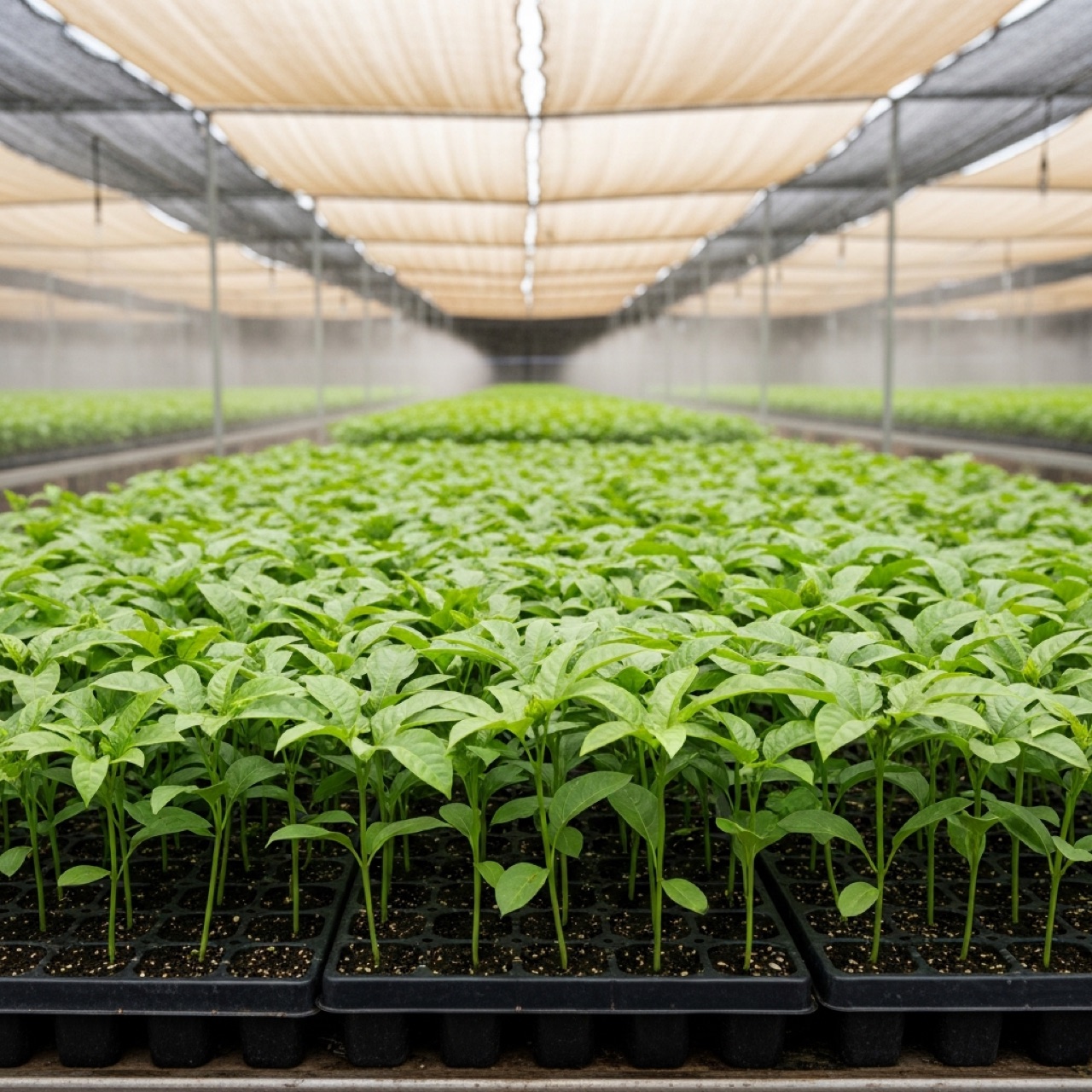
What this means for your farm: start with cuttings to build inventory fast off your best vines, but don't plant a whole field of them on their own roots if you have any soil disease history. Use seed to raise rootstock in parallel, then graft your premium scion onto it once the seedlings hit grafting diameter. The harder method is the one that survives.
The rootstock decision that saves your orchard
Fusarium wilt kills passion fruit vines. It lives in the soil, persists for up to 4 years even with no host present, and once it's in your ground it doesn't leave. The only reliable defense is a resistant rootstock.
Yellow passion fruit (P. edulis f. flavicarpa) rootstock resists Fusarium, resists nematodes, and partially resists Phytophthora. Graft your purple scion onto yellow rootstock and you get premium fruit on a root system that can handle what Hawaii's soil throws at it. This Purple-on-Yellow combination is the workhorse of commercial grafting.
For higher elevations above 2,000 feet, where winter lows dip into the 30s°F, P. caerulea rootstock tolerates temperatures down to 24°F and resists both Fusarium and Phytophthora. It's the cold-climate insurance policy.
| Yellow (P. edulis f. flavicarpa) | Fusarium, nematodes, partial Phytophthora | Frost-sensitive | Standard commercial; below ~2,000 ft |
| P. caerulea | Fusarium, Phytophthora | Down to 24°F | Above 2,000 ft / cold winters |
| Own roots (seedling/cutting) | Nothing added | Varies | Only on clean, disease-free ground |
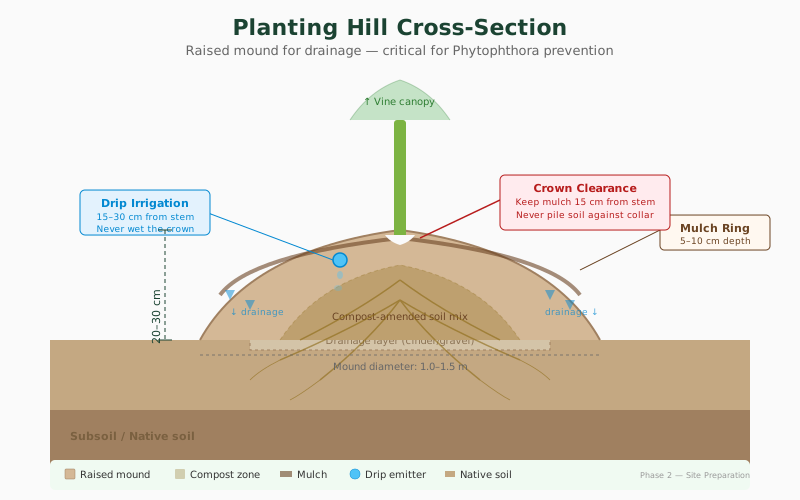
The other half of the protection question is what you're grafting onto. A grafted plant gives you a labeled diagram-clean way to think about it: tough roots below, premium fruit above, and a planting hill built so the union never gets buried.
Is a passion fruit nursery actually profitable?
Here's where it gets interesting. A grafted Purple-on-Yellow plant costs $4.60 to $8.55 to produce. You can sell it for $8 to $15 retail, or $15 to $25 if it's virus-tested. That's a healthy margin per plant — but margin only matters if there's demand. There is.
Hawaii has somewhere between 100 and 300 active passion fruit growers, each replacing 50 to 100 plants per year. That's 5,000 to 30,000 plants of annual demand — and local supply isn't meeting it.
| Production cost per plant | $4.60 | $8.55 |
| Retail price (standard) | $8.00 | $15.00 |
| Retail price (virus-tested) | $15.00 | $25.00 |
| Gross margin per standard plant | ~$3.40 | ~$6.45 |
| Conservative | 5,000 | $12 | ~$9,000 |
| Mid | 10,000 | $12 | ~$18,000 |
| Statewide demand ceiling | 30,000 | $12 | demand exists; capacity-limited |
At 5,000 plants per year and a $12 average sale price, you're looking at roughly $9,000 net profit after overhead. At 10,000 plants, that doubles. It won't replace fruit income, but it's real money during the 12–18 months before your own vines start producing — which is exactly when a new operation has bills and no fruit revenue.
One requirement before any of this: you'll need an HDOA Plant Nursery License before your first sale. It comes with annual inspection and record-keeping of plant origins and sales. The Hawaii Department of Agriculture Plant Industry Division in Hilo handles licensing at (808) 974-4141. The process is straightforward but mandatory — selling plants without the license is not legal.
What about tissue culture?
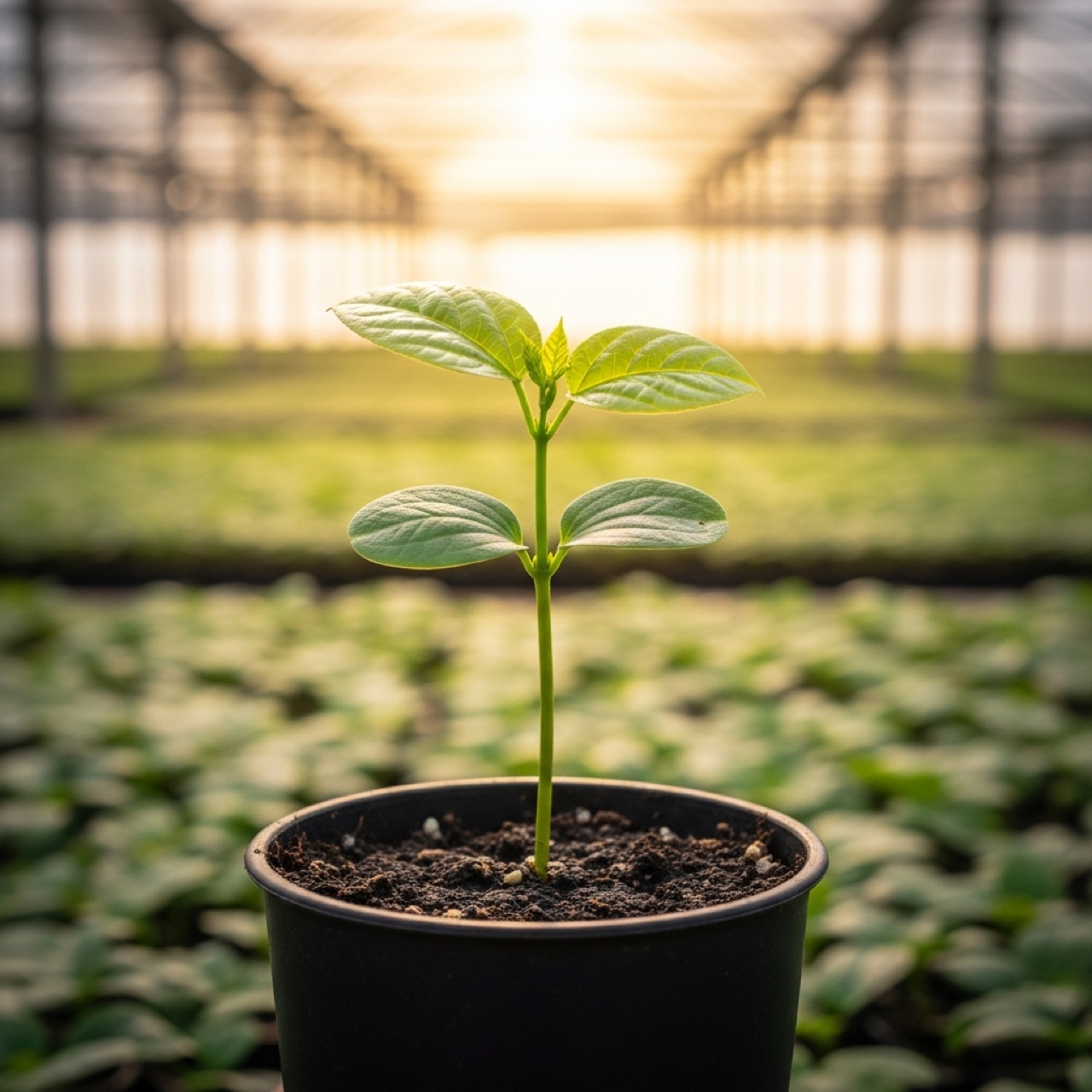
Tissue culture produces virus-free plants from tiny tissue samples in a sterile lab. It's the long-term answer to Passion Fruit Woodiness Virus, which causes 30–50% yield losses in infected orchards — a number big enough that clean foundation stock is worth chasing.
But it's not commercially viable as a standalone operation yet. The market is too small and the lab costs too high. The practical path is a university partnership — UH CTAHR has the capability, and virus-free foundation stock from their lab could feed into conventional nursery propagation within 3–5 years. File tissue culture under "watch this space," and focus on clean cuttings and quality grafts today.
The quick-start checklist
If you're setting up a propagation operation, here's the minimum:
- Shade house with 40–50% shade cloth and wind protection (non-negotiable in Hawaii)
- Misting system that activates when humidity drops below 70–80%
- Rooting hormone: IBA at 750 ppm for cuttings
- Growing media: peat + 10–15% perlite for cuttings; 4:2:1 soil:compost:superphosphate for seedlings
- HDOA nursery license before selling anything
- Mother block of your best-performing vines for scion and cutting wood
Start with cuttings to build inventory fast. Add grafting once your rootstock seedlings are growing. Sell the overflow. The plants you grow yourself will be adapted to your exact conditions, available when you need them, and — per square foot — potentially the most profitable thing on the property.
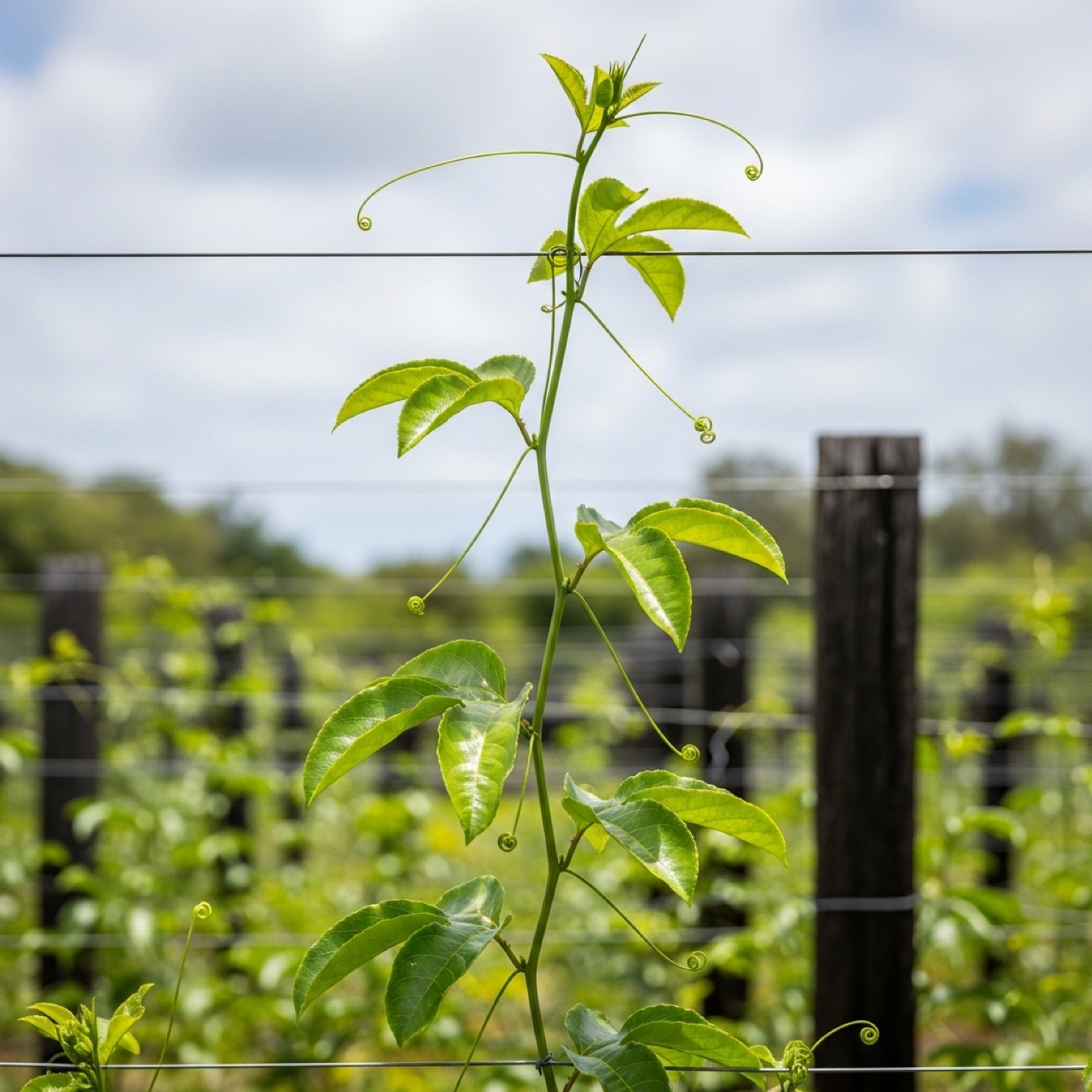
What this means for your farm: propagation is a build order, not a single choice. Cuttings for fast inventory, seed for rootstock, grafting for the disease-resistant plants you'll actually field — and a nursery license filed before any of it touches a customer. Done in that order, the nursery funds itself and then funds the wait for fruit.
Sources
- EMBRAPA Cerrados — Passion Fruit Grafting Technical Circular (2018); whip-and-tongue and cleft graft success rates
- University of Hawaii CTAHR Extension — rootstock resistance, tissue culture capability, nursery propagation
- UF/IFAS Extension — passion fruit production and disease management
- USDA ARS — Fusarium wilt persistence and rootstock resistance research
- Hawaii Department of Agriculture, Plant Industry Division (Hilo, (808) 974-4141) — Plant Nursery License requirements
New articles every other Wednesday
Get each new piece in your inbox. No spam, unsubscribe anytime.