Where Can You Actually Grow Passion Fruit? The Real US Map
By Brian
Passion fruit has a reputation for being tropical and therefore off-limits — something you can only grow if you happen to live in Hawaii or South Florida. That reputation is half right and mostly too conservative.
The honest answer is that where you can grow it depends almost entirely on which passion fruit you grow. There are three commercial species, and they tolerate three different climates. Match the species to your site and the viable US range runs from the Texas Gulf Coast to the California coast, plus Puerto Rico. Get the match wrong and you'll lose a planting that the hardiness map said should have worked — usually to bad drainage, not cold.
Which species fits your climate?
Most of what people call "passion fruit" is really several Passiflora species with meaningfully different cold tolerance and elevation preferences. Three matter commercially, and they sort cleanly by temperature.
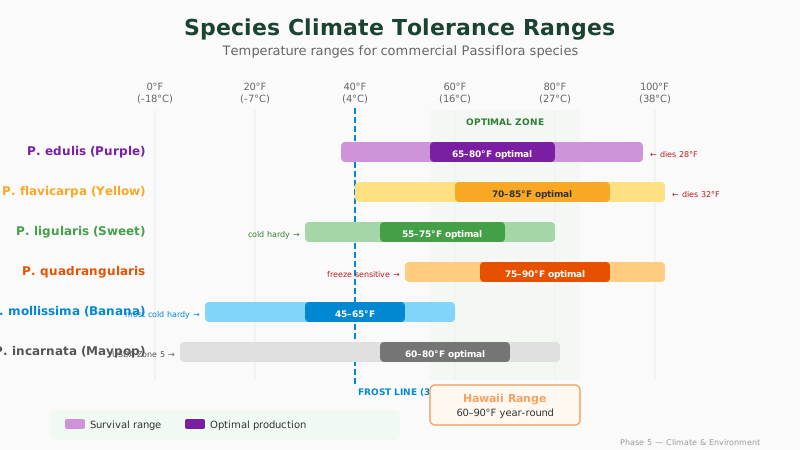
Yellow passion fruit (P. edulis f. flavicarpa) is the high-yield commercial standard — the variety behind most of Hawaii's lilikoi and most of the world's juice. It's also the most cold-sensitive of the three. It thrives in USDA zones 10–12, tolerates brief exposure to about 28°F before significant damage, and performs best below 2,500 feet in Hawaii. Frost kills it. It needs reliably frost-free conditions, full stop.
Purple passion fruit (P. edulis f. edulis) is the hardy one — viable in zones 9–11 — and it actually prefers cooler conditions than yellow. It survives brief frosts down to roughly 26°F but dislikes the sustained heat of tropical lowlands. That 2°F difference between 28°F and 26°F sounds trivial; for a zone 9b grower it's the difference between a crop and a replant. Purple is the species that pushes the viable range into coastal California and the Gulf Coast.
Sweet granadilla (P. ligularis) is the surprise — a high-elevation species producing some of the world's most prized fruit at 5,000–9,000 feet in Latin America. It wants cool temperatures (55–75°F optimal), struggles in lowland heat, and is a niche bet for specific highland microclimates rather than a plan you build a business around.
| Yellow (P. edulis f. flavicarpa) | 10–12 | ~28°F | 70–85°F | Below 2,500 ft |
| Purple (P. edulis f. edulis) | 9–11 | ~26°F | 65–80°F | Above 2,500 ft (HI) |
| Sweet granadilla (P. ligularis) | Highland only | Cool-hardy | 55–75°F | 5,000–9,000 ft |
What this means for your farm: start with your coldest realistic night, not your average day. If you ever see 28°F, yellow is a gamble; if you ever see 26°F, even purple needs protection. Pick the species whose cold limit clears your worst expected cold snap with margin, then optimize everything else.
Where you can grow it in the US
For most American growers the practical geography is wider than the reputation suggests.
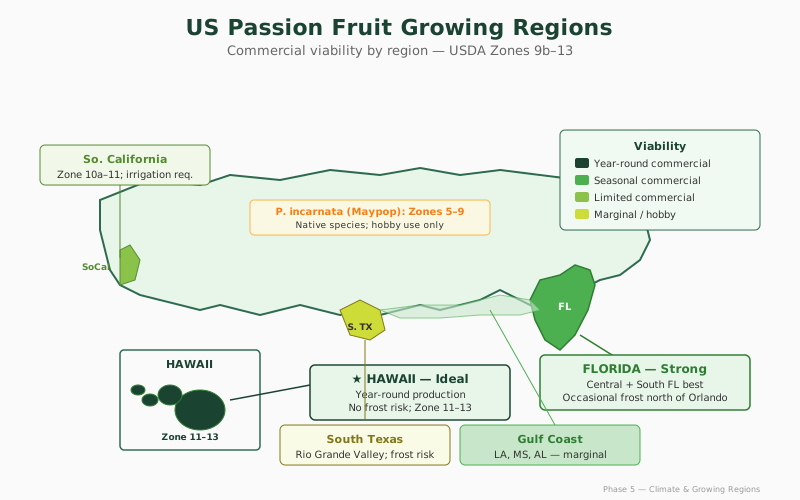
Hawaii is the most favorable environment in the country. Yellow lilikoi dominates below 2,500 feet on the leeward sides of all islands; purple performs better above that. The Big Island's gradient from sea level to over 13,000 feet packs every microclimate into a short drive, which makes variety-by-elevation one of the most important calls a Hawaii grower makes — more on that below.
South Florida (zones 10–11) is the primary mainland production area. Miami-Dade and Broward counties have a real track record, mostly with purple. Summer heat and humidity demand disease-resistant varieties and disciplined drainage. Purple farm-gate prices in South Florida ran around $5/lb in 2022.
Central Florida (zone 9b) is viable with protection and the right variety. Frost risk is real — growers should be ready for cold snaps and may need to treat passion fruit as a replant-every-few-years crop rather than a permanent installation.
California coastal zones (9–10) are close to ideal for purple — the moderate coastal temperatures from San Diego to the Bay Area suit it well. Inland valley summers run too hot; cold winters near the mountains are the limiter. Southern California coast has the best overall profile.
Texas Gulf Coast (zone 9) is on the edge. Brownsville and the Lower Rio Grande Valley have recorded successful commercial production. Houston and Corpus Christi are viable with careful site selection. Austin and San Antonio are marginal — possible in good years, frozen out in others.
Puerto Rico and the USVI are overlooked. Puerto Rico's climate suits yellow well, and the import restrictions that protect Hawaii producers apply equally to US territory production. The market is underserved and under-researched.
| Hawaii | 11–13 | Yellow (low) / Purple (high) | Best in US; year-round |
| South Florida | 10–11 | Purple | Strong commercial |
| Central Florida | 9b | Purple + frost protection | Viable; replant risk |
| California coast | 9–10 | Purple | Strong for purple |
| Texas Gulf Coast | 9 | Purple | Edge; site-dependent |
| Puerto Rico / USVI | 11–13 | Yellow | Underserved opportunity |
Soil is where plantings fail quietly
Climate gets the attention, but soil is where many plantings die without anyone noticing the cause. Passion fruit has specific soil preferences that matter more than they do for most tropical crops.
Drainage is non-negotiable. Passion fruit is extraordinarily sensitive to waterlogged roots. Fusarium root rot and Phytophthora crown rot — the two most common disease killers of commercial plantings — both thrive in poorly drained soil. Before you plant anything, run a percolation test: if water doesn't drain through 12 inches of soil in under 2 hours, you either fix the drainage (raised beds, drain lines) or pick a different site. There's no variety that fixes bad drainage.
pH matters more than growers expect. The optimal range is 6.0–6.5. Below 5.5, aluminum and manganese turn toxic. Above 7.0, iron, manganese, and zinc become unavailable even though they're present in the soil — you'll see deficiency symptoms in plants growing in soil that tests as adequately fed. A soil test before planting isn't optional; it's the cheapest insurance you'll buy.
Texture. Sandy loam to loam is ideal: good drainage, enough water-holding capacity, easy root penetration. Heavy clay needs amendment before planting (organic matter, gypsum, maybe raised beds). Pure sand drains too fast and needs organic matter to hold water and nutrients between irrigations.
Organic matter: target 3–5%. Hawaii volcanic soils often run 3–8% in productive areas, which is part of why the islands suit passion fruit so well. Most mainland ag soils run lower. Cover cropping, compost, and minimal tillage all move the number in the right direction over time.
| Drainage (perc test) | < 2 hr through 12 in | Fusarium / Phytophthora root and crown rot |
| pH | 6.0–6.5 | Below 5.5: Al/Mn toxicity. Above 7.0: Fe/Mn/Zn lockout |
| Texture | Sandy loam to loam | Clay waterlogs; pure sand drains too fast |
| Organic matter | 3–5% | Low OM: poor moisture buffering and nutrition |
How much water it needs
Passion fruit isn't drought-tolerant. It needs consistent moisture, especially during fruit development. Water stress during the roughly 60-day fruit-fill period causes premature drop — you'll find green fruit on the ground before it matures.
But consistent doesn't mean abundant. Annual rainfall requirement is 35–60 inches, well-distributed across the year. For most US sites — anything other than windward Hawaii — that means supplemental irrigation. Drip is the commercial standard: it delivers water to the root zone without wetting the foliage (which lowers disease pressure) and holds the steady soil moisture that prevents fruit drop.
Scheduling shifts with growth stage. Establishment (first 3–6 months) wants frequent light watering to push root development. Mature vines want less frequent but deeper irrigation to drive roots down.
What this means for your farm: budget for drip from day one unless you're on the windward side of a Hawaiian island. Treat the 60-day fruit-fill window as the period where moisture must not swing, and schedule irrigation around protecting it.
The elevation variable in Hawaii
For Hawaii growers, elevation is the master variable — it decides which varieties work, what disease pressure looks like, how much you irrigate, and what your trellis should optimize for. CTAHR's elevation-based crop recommendations map yellow lilikoi to sea level through about 1,500 feet, purple to 500–3,000 feet, and sweet granadilla to the 3,000–5,000 foot band — a species-selection framework most mainland guides ignore entirely.
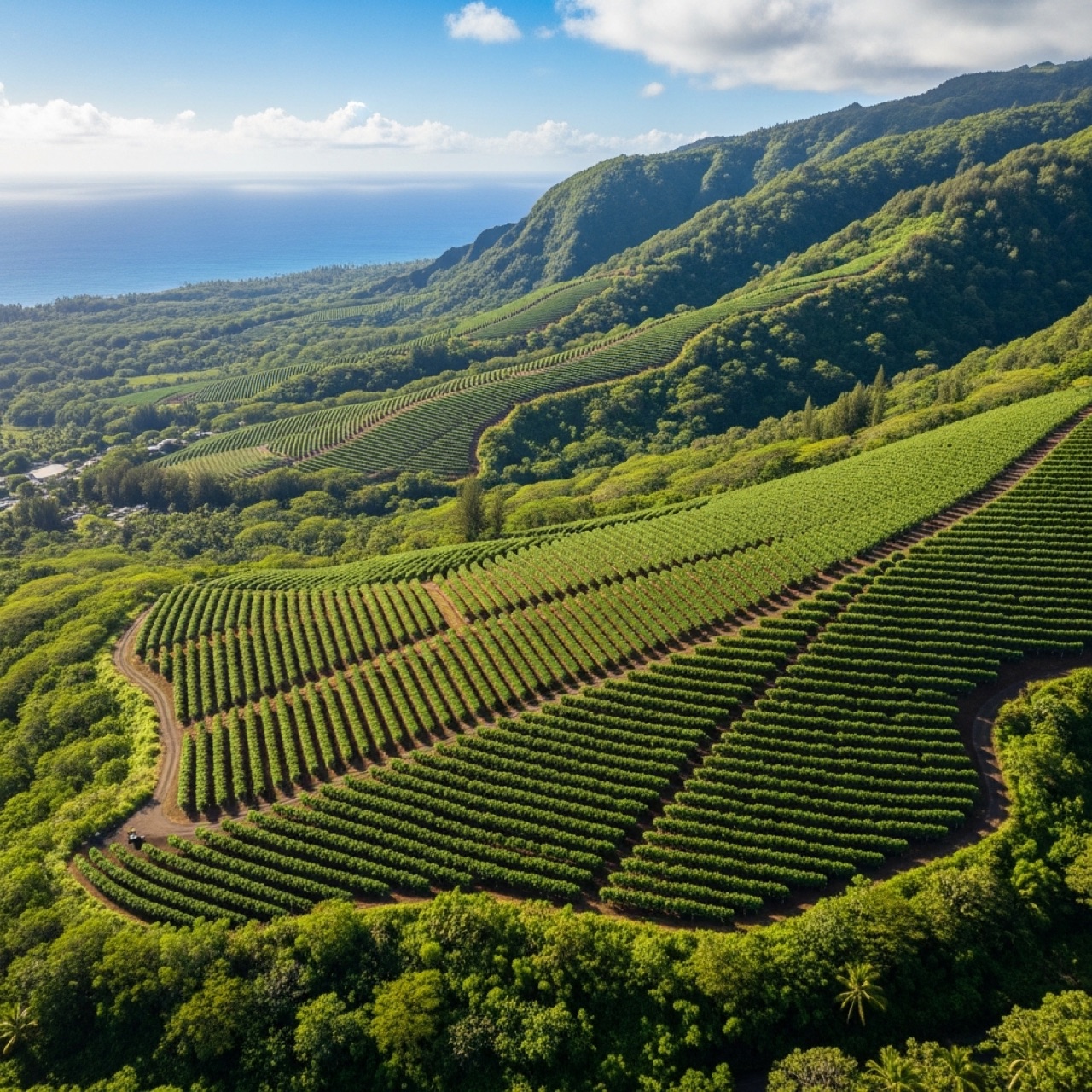
| Below 1,000 ft | Yellow | Highest | Highest (nematodes, Fusarium) | Full irrigation typical on leeward sides |
| 1,000–2,500 ft | Yellow | High | Lower | Transitional; rainfall cuts irrigation cost |
| Above 2,500 ft | Purple / hybrids | Lower | Shifts (less Fusarium, more Phytophthora in wet areas) | Cooler nights improve flavor and pricing |
The growers who win are the ones who map their site first — drainage, pH, elevation, rainfall, sun exposure — and then pick varieties to fit. The ones who plant what they like and hope the conditions cooperate are the ones replanting in two years.
Where this leaves you
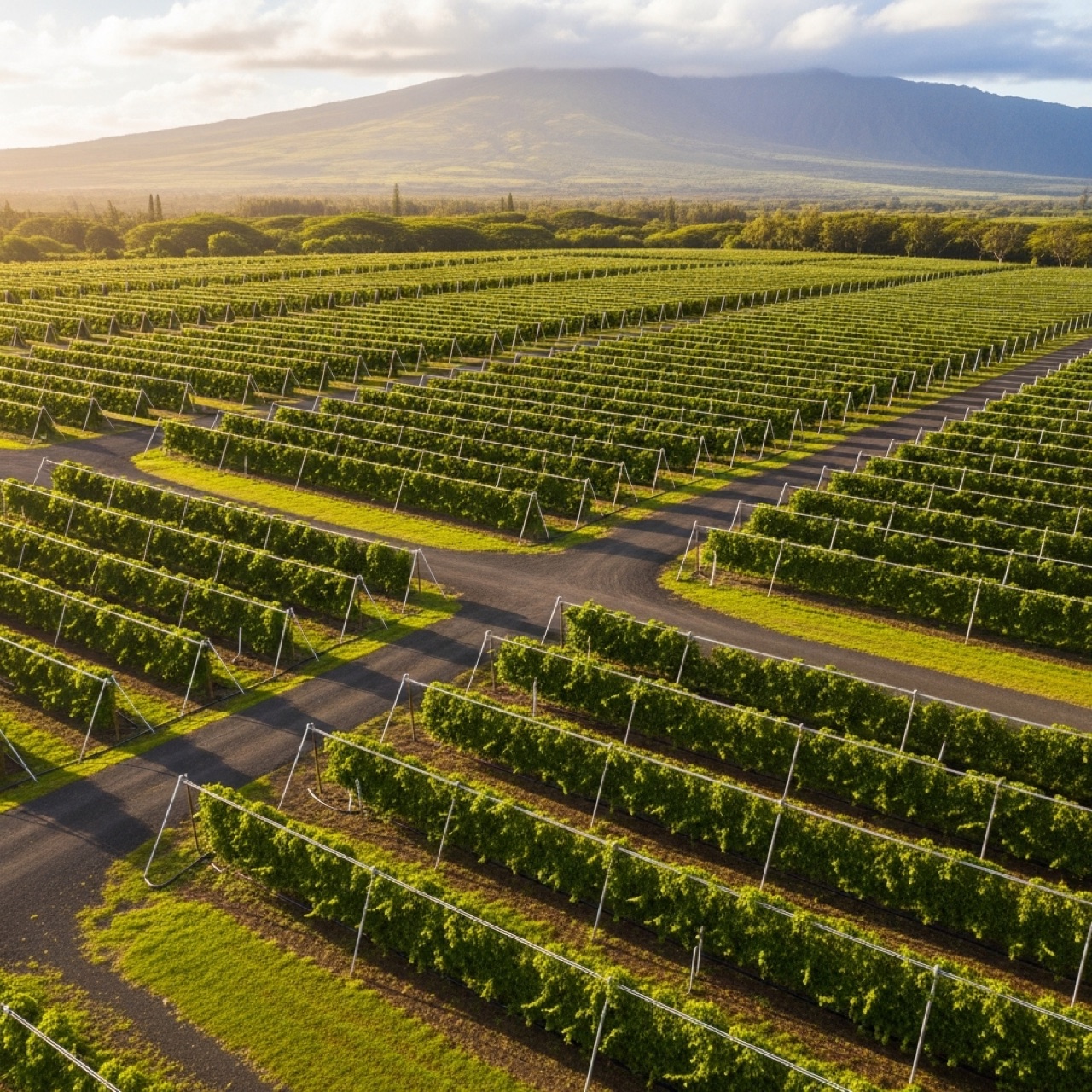
The climate map is more generous than the reputation, but it's not the constraint that bites. Pick your species against your coldest night — yellow only where frost is genuinely off the table, purple where you can clear 26°F, granadilla only in true highland microclimates. Then prove the soil drains before you spend a dollar on plants, because no variety and no climate advantage survives waterlogged roots. In Hawaii, let elevation make the species call for you and accept the yield-versus-quality trade that comes with climbing.
Map the site, then plant. Not the other way around.
Sources
- University of Hawaii CTAHR Extension — elevation-based crop recommendations and lilikoi production guidance
- Purdue University Center for New Crops — Passiflora edulis NewCROP factsheet
- USDA Agricultural Research Service — Plant Hardiness Zone Map
- USDA NRCS — soil surveys (drainage, texture, and organic matter benchmarks)
- UF/IFAS Extension — passion fruit production in South Florida (farm-gate pricing, 2022)
- EMBRAPA Cerrados — passion fruit production research
New articles every other Wednesday
Get each new piece in your inbox. No spam, unsubscribe anytime.